Battery Energy Storage Systems (BESS)

كل تصميماتنا مطابقة للكود السعودى والدولى

معتمدين من بلدى

معتمدين من امانة الرياض

معتمدين من هيئة مدن

معتمدين من الدفاع المدنى

Learn about the importance of contracting with an accredited engineering consultancy, the conditions and requirements involved, and how to choose the best engineering offices to manage and design your projects effectively and efficiently.
Contact us now or reach us on WhatsApp at the following number:
0557984942

© 2012 All Rights Reserved

Battery Energy Storage Systems (BESS)


Battery Energy Storage Systems (BESS): A concise overview Battery Energy Storage Systems store electrical energy for use later, helping utilities, businesses, and households balance supply and demand, integrate more renewables, and improve reliability. A BESS is more than just a bank of batteries; it combines cells, power electronics, control software, and thermal management to deliver electricity when, where, and how it’s needed. How a BESS works - Energy source: The core is an array of battery cells that store energy in chemical form. - Power conversion system (inverter/charger): Converts alternating current (AC) to direct current (DC) for charging and back to AC for discharging, providing the right voltage and frequency to the grid or facility. - Battery management system (BMS): Monitors cell voltages, temperatures, state of charge, and health; ensures safe operation and optimizes performance. - Thermal management: Maintains optimal temperatures to maximize efficiency and extend life. - Energy management system (EMS): Optimizes when to charge or discharge, coordinating with other energy resources, grids, and tariffs. - Safety systems and fire suppression: Detects faults and mitigates risks to people and equipment. Common battery chemistries and configurations - Lithium-ion: The most common in modern BESS, with variants such as NMC (nickel-manganese-cobalt) and LFP (lithium iron phosphate). High energy density and fast response. - Flow batteries: Use liquid electrolytes (e.g., vanadium redox) stored separately from the power stack; long cycle life and easy to scale for large installations. - Lead-acid: Lower cost and well understood, used in smaller or budget-conscious projects but with shorter life and heavier weight. - Solid-state and other emerging chemistries: Promising improvements in safety and energy density, still maturing for large deployments. - Configurations: Cells are grouped into modules; modules are connected into racks or strings; multiple racks form the overall system. Depending on goals, BESS can be designed for longer-duration energy (MWh) or high-power short-duration services (MW). Key benefits of BESS - Grid reliability and resilience: Stores energy during low-demand periods and supplies it during outages or high-need events. - Renewable integration: Smooths variability from wind and solar, reducing curtailment and enabling higher penetration of renewables. - Peak shaving and demand charge management: Offsets peak electricity use to lower energy costs for commercial and industrial customers. - Ancillary services: Provides frequency regulation, voltage support, spinning reserve, and service aggregation in markets. - Fast response: Batteries can react within milliseconds, much faster than traditional generators, which benefits grid stability. - backup power for critical facilities and microgrids: Keeps essential loads powered during outages or in remote locations. Applications by scale - Grid-scale: Systems from tens of MWh to hundreds or thousands of MWh connected to transmission or distribution networks for reliability, congestion relief, and renewable integration. - Commercial and industrial (C&I): tens to thousands of kWh, helping office campuses, data centers, manufacturing, and retail sites reduce peak demand and secure uptime. - Residential: Small systems of a few kWh to a few tens of kWh, often paired with solar PV to provide backup power and demand management for homes. - Microgrids and remote/off-grid: Standalone energy islands that combine BESS with local generation to provide power independence and resilience in remote areas or critical facilities. Sizing and performance considerations - Energy capacity (kWh): How much total energy the system can store. Determines how long it can meet a given load or how many hours of operation it can supply. - Power capacity (kW or MW): How quickly the system can deliver energy. Affects peak-shaving, backup duration during outages, and response to fast events. - Duration and depth of discharge (DoD): Longer duration often requires larger energy capacity; DoD affects usable life and warranty terms. - Round-trip efficiency: The energy lost in charging and discharging. Higher efficiency reduces operating costs. - Cycle life and degradation: How many charge-discharge cycles the system can endure before capacity falls below a threshold. - Thermal and safety management: Proper cooling and fire safety are critical, especially for high-energy lithium-ion systems. - Location and integration: Proximity to load centers, grid connection permissions, fire codes, and interconnection standards influence design and cost. - Economics: Capital cost, operating costs, expected energy savings, market revenue, and incentives shape project viability. Challenges and considerations - Cost and financing: Upfront capital is a major consideration, though costs have fallen rapidly and financing models (power purchase agreements, performance-based contracts) are more available. - Safety and reliability: Battery fires and thermal runaway require robust safety systems, installation practices, and ongoing maintenance. - Lifecycle management: Battery aging, replacement cycles, and recycling/second-life options affect total cost of ownership. - Software and cybersecurity: EMS and BMS require sophisticated software, which must be secure and resilient. - Regulatory and market access: Interconnection standards, tariff structures, and participation in energy markets vary by region and can affect revenue streams. - Supply chain risks: Raw materials (lithium, cobalt, nickel) and manufacturing capacity can influence project timelines and costs. Trends shaping BESS today - Cost declines: Continued reductions in battery cost per kWh are expanding feasible applications. - Modular and scalable designs: Standardized modules enable faster deployment and easier upgrades. - Multi-service operation: BESS increasingly performs several services simultaneously (e.g., reliability, frequency response, and energy arbitrage) for higher value. - Hybrid and hybridized energy systems: Combining BESS with solar, wind, and demand response to maximize value. - Advanced controls and AI: Optimized charging strategies, predictive maintenance, and better asset management through data analytics. - Safety and sustainability: Improved thermal management, fire suppression, and recycling pathways to minimize environmental impact. Conclusion Battery Energy Storage Systems are a versatile and rapidly evolving technology that helps bridge the gap between energy supply and demand. By storing energy when it’s plentiful and inexpensive and releasing it when it’s needed, BESS support a cleaner, more reliable, and more flexible power system. Whether for a utility-scale project, a commercial building, or a home, BESS are playing an increasingly important role in the transition to a low-carbon energy future. If you’d like, I can tailor this overview to a specific audience (utility planners, business owners, or policymakers) or add a short case study.


Battery Energy Storage Systems (BESS)

We are a consulting and contracting company in the same group, For pricing or design download our app, For any purchasing please contact us ASAP 


All designs are according to NFPA

© 2020 All Rights Reserved

Engineering & Safety Consulting Company Saudi Arabia
Saif – Engineering & Safety Consulting

Integrated Engineering & Safety Consulting Services

We are a specialized engineering consulting firm delivering comprehensive architectural, structural, mechanical, electrical, fire protection, industrial, oil & gas, and environmental engineering services. All designs, studies, and reports are prepared in full compliance with SBC, NFPA, FIDIC, API, ISO, and Saudi Civil Defense & MODON requirements.

🔧 1. General Engineering Consulting

  • FIDIC Contract Administration & Claims Management
  • Engineering Feasibility Studies & Technical Due Diligence
  • Project Management & Technical Supervision
  • Engineering Risk Analysis for Mega & Industrial Projects

🏗️ 2. Civil & Structural Engineering Consulting

  • Structural design of reinforced concrete & steel buildings
  • High-rise towers, bridges, tunnels, and road structures
  • Geotechnical & soil investigation studies
  • Seismic, wind & load analysis (ETABS / SAFE)
  • Structural assessment & retrofit of existing buildings

📐 3. Architectural Design & Urban Planning

  • Residential, commercial & mixed-use architectural design
  • Façade engineering & sustainable green architecture
  • Urban planning & master planning services
  • BIM modeling & coordination (Revit Architecture)

⚙️ 4. Mechanical Engineering Consulting

  • HVAC systems design & energy optimization
  • Water supply, drainage & plumbing systems
  • Pumping stations, compressors & industrial cooling
  • Fuel systems: Diesel, LPG & Natural Gas
  • Industrial mechanical & process systems

⚡ 5. Electrical Engineering Consulting

  • Low & Medium Voltage (LV/MV) power systems
  • Load calculations, voltage drop & short-circuit studies
  • Solar PV & renewable energy systems
  • Low current & ELV systems design
  • BMS, SCADA, CCTV & Access Control Systems

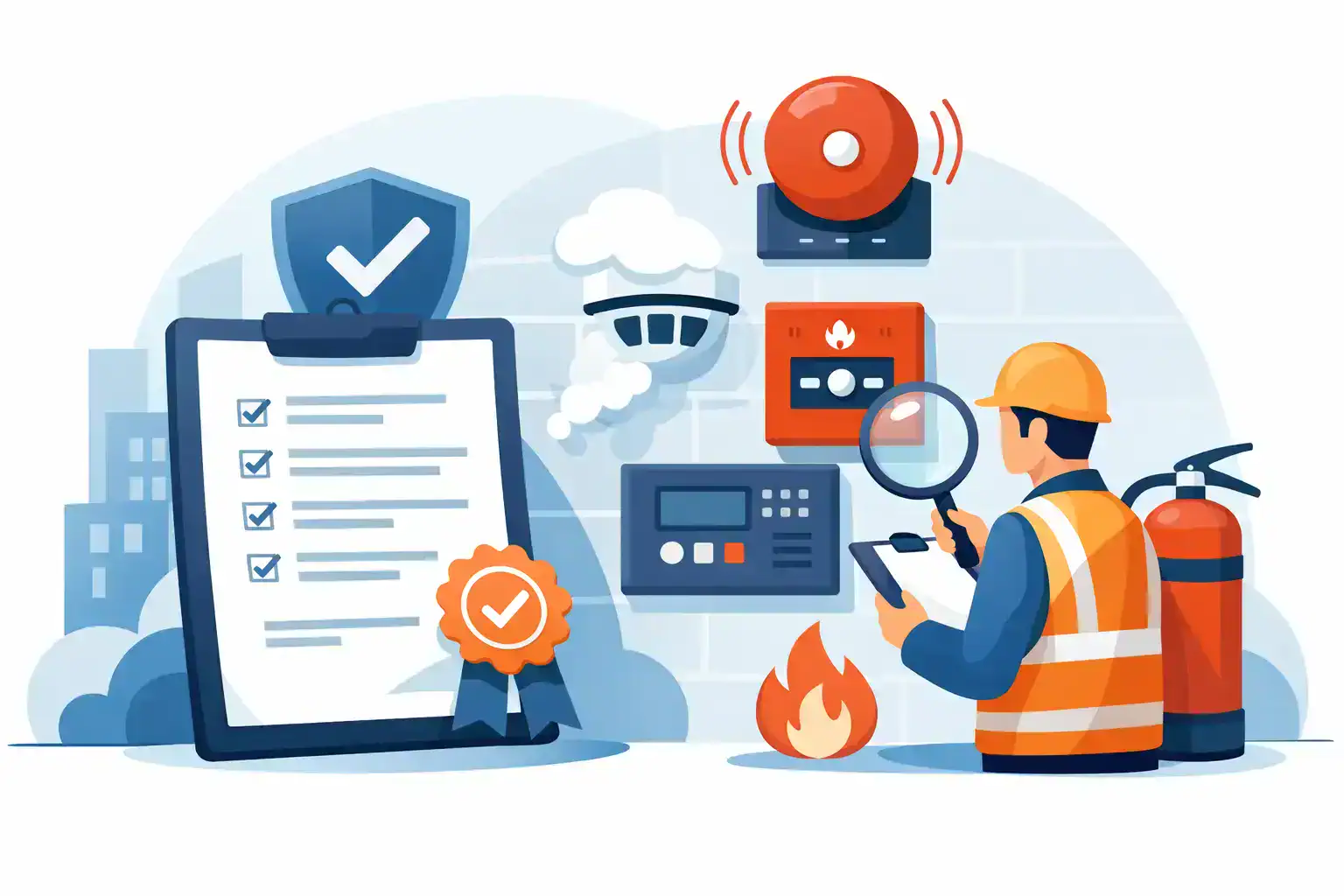
🔥 6. Fire Protection & Life Safety Engineering

This is our core specialty. All fire protection designs, reports, and approvals are delivered in strict compliance with SBC, NFPA, Saudi Civil Defense, and MODON regulations.

🔴 Firefighting Systems Design

  • Wet, Dry, Pre-Action & Deluge Sprinkler Systems
  • Foam systems, foam monitors & foam standpipes
  • Water Mist systems (NFPA / UL / FM)
  • Fire pump room & hydraulic calculations
  • ESFR, CMSA, CMDA & In-Rack Sprinklers

🔔 Fire Alarm & Detection Systems

  • Addressable, Conventional & Voice Evacuation
  • VESDA, Linear Heat & Video Smoke Detection
  • Smart & IoT-enabled fire detection systems

📄 Fire Safety Studies & Reports

  • Fire Strategy Reports
  • Fire Risk Assessments
  • CFD Smoke & Evacuation Analysis
  • SBC, NFPA & MODON compliance reports
  • Emergency & Evacuation Plans

🏭 7. Industrial Engineering Consulting

  • Factory layout & material flow optimization
  • Production line improvement & lean manufacturing
  • OEE, time & motion studies
  • Industrial piping & process engineering

🛢️ 8. Oil & Gas Engineering Consulting

  • API 650 & API 620 storage tank design
  • LPG, LNG & Natural Gas piping systems
  • Explosion risk & ATEX hazard studies

🌿 9. Environmental Engineering Consulting

  • Environmental Impact Assessments (EIA)
  • Air quality & emission monitoring
  • Waste & hazardous waste management
  • STP, WWTP & grey water systems

📞 Contact Us for Engineering Proposals

WhatsApp / Call: 0557984942

WhatsApp / Call: 0545587404

Email: project.manager@telal-elwatan.com
لقسم الاستشارات الهندسية والتقارير والشهادات ومتطلبات الدفاع المدنى والبلدية و هيئة مدن  يرجى الاتصال على 0557984942

للتوريدات والطلبات الاخرى يرجى ارسال طلبك واتس اب لخدمتكم

بشكل اسرع على احد الارقام التالية 0531433890 

X