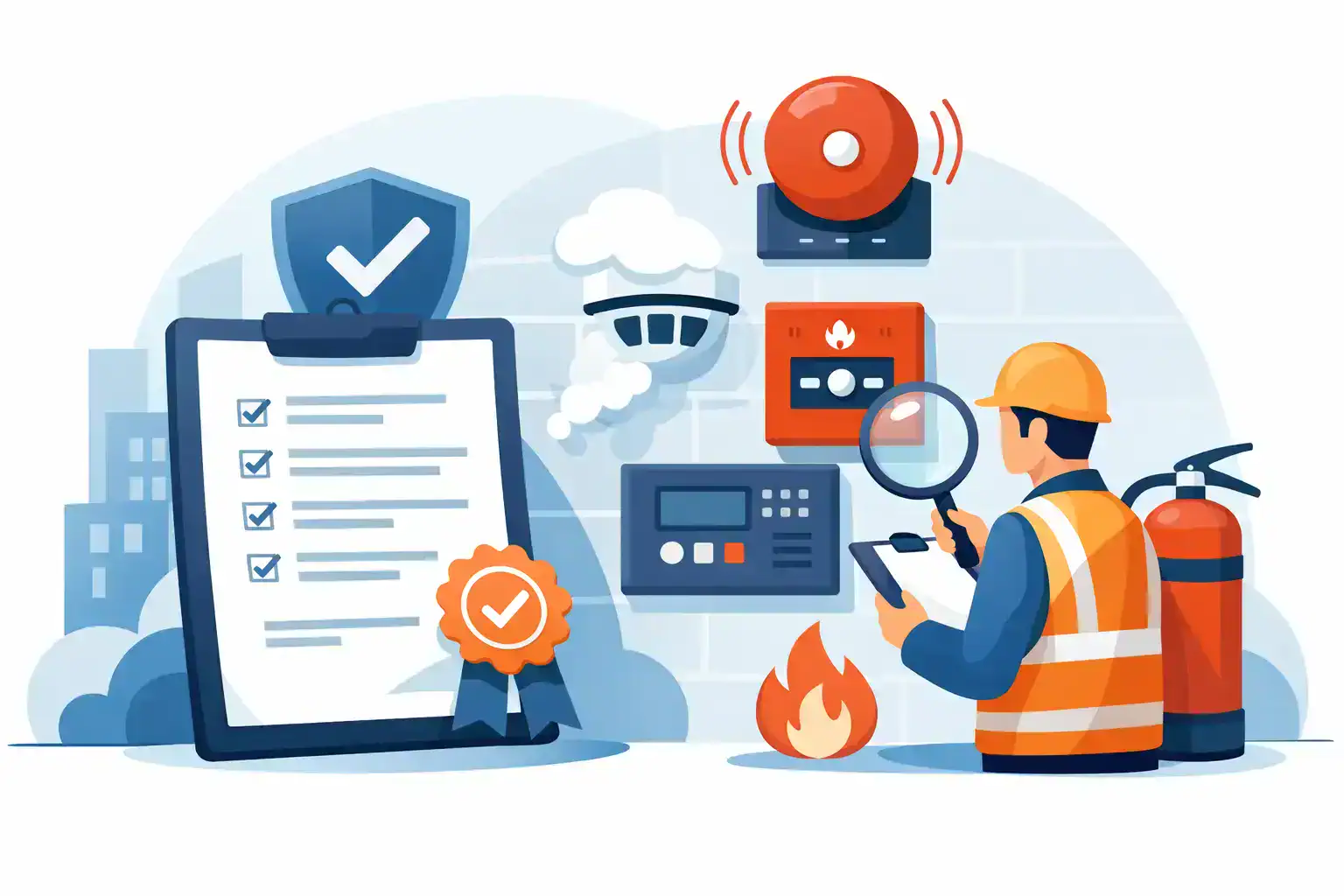
Building Management System (BMS)

كل تصميماتنا مطابقة للكود السعودى والدولى

معتمدين من بلدى

معتمدين من امانة الرياض

معتمدين من هيئة مدن

معتمدين من الدفاع المدنى

Learn about the importance of contracting with an accredited engineering consultancy, the conditions and requirements involved, and how to choose the best engineering offices to manage and design your projects effectively and efficiently.
Contact us now or reach us on WhatsApp at the following number:
0557984942

© 2012 All Rights Reserved

Building Management System (BMS)


Building Management System (BMS): A Short Guide A Building Management System (BMS), also called a building automation system, is a centralized platform that monitors, controls, and optimizes a building’s mechanical and electrical systems. Its aim is to create comfortable indoor environments while improving energy efficiency, safety, and overall operational performance. What is a BMS? A BMS coordinates subsystems such as heating, ventilation, and air conditioning (HVAC); lighting; security and access control; fire safety; and energy metering. It gathers data from sensors and devices, processes that data, and issues commands to actuators to adjust conditions in real time. Modern BMS platforms often run on open standards and can be deployed on-premises, in the cloud, or in a hybrid setup. Core components - Sensors: monitor temperature, humidity, CO2, occupancy, light levels, water flow, and more. - Actuators and controllers: valves, dampers, relays, lighting dimmers, door locks, and other devices that execute changes. - Controllers: local or centralized devices that run control algorithms. - Supervisory software (HMI/SCADA): the user interface for monitoring, scheduling, and analytics. - Communications backbone: networks and protocols (e.g., BACnet, Modbus, KNX) that connect devices and systems. - Energy meters and submeters: track energy use by system or zone. - Data storage, reporting, and alarms: logs, dashboards, and alerting for anomalies or faults. What a BMS does - Monitoring and control: continuously observes conditions and adjusts equipment to meet setpoints. - Scheduling and demand management: automates daily/weekly routines to match occupancy and usage patterns. - Energy optimization: detects inefficiencies, optimizes HVAC and lighting, and supports peak-shaving strategies. - Fault detection and predictive maintenance: flags equipment faults early and helps plan maintenance before failures occur. - Analytics and reporting: provides insights, performance metrics, and compliance documentation. - Safety and security integration: ties into fire alarms, access control, and surveillance for a safer building. Benefits - Energy and cost savings through optimized operation. - Improved occupant comfort and productivity via consistent environmental conditions. - Centralized visibility across multiple systems, simplifying management. - Proactive maintenance and reduced downtime. - Compliance with regulations and better documentation for audits. - Enhanced safety and security through integrated monitoring. Common applications - Office and commercial buildings: smart scheduling, demand-controlled ventilation, and zone-based lighting. - Hospitals and labs: stringent environmental controls with high reliability and fault detection. - Schools and campuses: energy stewardship combined with comfort for classrooms and common areas. - Data centers: precise temperature and humidity control with rigorous monitoring. - Hotels: guest room automation, energy optimization, and centralized management. Implementation considerations - Legacy vs. new builds: retrofits may require adapters or middleware to integrate with existing equipment. - Open standards and interoperability: prefer platforms that support BACnet, Modbus, KNX, and other common protocols. - Cybersecurity: secure access, regular updates, and segmentation to protect critical systems. - Data governance: decide who can access data, how it’s stored, and how long it’s kept. - ROI and scalability: plan for a phased rollout that can scale with building expansions or additional sites. - Commissioning and change management: thorough testing and stakeholder engagement are key to success. Trends to watch - IoT-enabled, cloud-based BMS: easier access, remote monitoring, and scalable analytics. - Artificial intelligence and machine learning: advanced fault detection, predictive maintenance, and optimization. - Open, interoperable ecosystems: reduced vendor lock-in and easier integration of new devices. - Digital twins and immersive visualization: simulating and optimizing building performance in a virtual model. - Enhanced user experiences: mobile visualization, intuitive dashboards, and flexible control. Getting started - Define goals: energy reduction, comfort improvements, maintenance efficiency, or regulatory compliance. - Inventory systems and assets: what you have now, what needs integration, and data you want to capture. - Choose a scalable platform: consider open standards, cloud options, and future growth. - Plan a pilot: start with a single building or a single subsystem to demonstrate value. - Establish KPIs: energy intensity (kWh/m2), occupancy comfort metrics, maintenance costs, and uptime. - Prioritize cybersecurity and governance: establish policies, access controls, and regular audits. A well-implemented BMS can be a powerful backbone for building efficiency, safety, and occupant satisfaction. If you’d like, tell me your building type, goals, and current systems, and I can tailor a short, specific plan or article draft for you.


Building Management System (BMS)

We are a consulting and contracting company in the same group, For pricing or design download our app, For any purchasing please contact us ASAP 


All designs are according to NFPA

© 2020 All Rights Reserved

Engineering & Safety Consulting Company Saudi Arabia
Saif – Engineering & Safety Consulting

Integrated Engineering & Safety Consulting Services

We are a specialized engineering consulting firm delivering comprehensive architectural, structural, mechanical, electrical, fire protection, industrial, oil & gas, and environmental engineering services. All designs, studies, and reports are prepared in full compliance with SBC, NFPA, FIDIC, API, ISO, and Saudi Civil Defense & MODON requirements.

🔧 1. General Engineering Consulting

  • FIDIC Contract Administration & Claims Management
  • Engineering Feasibility Studies & Technical Due Diligence
  • Project Management & Technical Supervision
  • Engineering Risk Analysis for Mega & Industrial Projects

🏗️ 2. Civil & Structural Engineering Consulting

  • Structural design of reinforced concrete & steel buildings
  • High-rise towers, bridges, tunnels, and road structures
  • Geotechnical & soil investigation studies
  • Seismic, wind & load analysis (ETABS / SAFE)
  • Structural assessment & retrofit of existing buildings

📐 3. Architectural Design & Urban Planning

  • Residential, commercial & mixed-use architectural design
  • Façade engineering & sustainable green architecture
  • Urban planning & master planning services
  • BIM modeling & coordination (Revit Architecture)

⚙️ 4. Mechanical Engineering Consulting

  • HVAC systems design & energy optimization
  • Water supply, drainage & plumbing systems
  • Pumping stations, compressors & industrial cooling
  • Fuel systems: Diesel, LPG & Natural Gas
  • Industrial mechanical & process systems

⚡ 5. Electrical Engineering Consulting

  • Low & Medium Voltage (LV/MV) power systems
  • Load calculations, voltage drop & short-circuit studies
  • Solar PV & renewable energy systems
  • Low current & ELV systems design
  • BMS, SCADA, CCTV & Access Control Systems

🔥 6. Fire Protection & Life Safety Engineering

This is our core specialty. All fire protection designs, reports, and approvals are delivered in strict compliance with SBC, NFPA, Saudi Civil Defense, and MODON regulations.

🔴 Firefighting Systems Design

  • Wet, Dry, Pre-Action & Deluge Sprinkler Systems
  • Foam systems, foam monitors & foam standpipes
  • Water Mist systems (NFPA / UL / FM)
  • Fire pump room & hydraulic calculations
  • ESFR, CMSA, CMDA & In-Rack Sprinklers

🔔 Fire Alarm & Detection Systems

  • Addressable, Conventional & Voice Evacuation
  • VESDA, Linear Heat & Video Smoke Detection
  • Smart & IoT-enabled fire detection systems

📄 Fire Safety Studies & Reports

  • Fire Strategy Reports
  • Fire Risk Assessments
  • CFD Smoke & Evacuation Analysis
  • SBC, NFPA & MODON compliance reports
  • Emergency & Evacuation Plans

🏭 7. Industrial Engineering Consulting

  • Factory layout & material flow optimization
  • Production line improvement & lean manufacturing
  • OEE, time & motion studies
  • Industrial piping & process engineering

🛢️ 8. Oil & Gas Engineering Consulting

  • API 650 & API 620 storage tank design
  • LPG, LNG & Natural Gas piping systems
  • Explosion risk & ATEX hazard studies

🌿 9. Environmental Engineering Consulting

  • Environmental Impact Assessments (EIA)
  • Air quality & emission monitoring
  • Waste & hazardous waste management
  • STP, WWTP & grey water systems

📞 Contact Us for Engineering Proposals

WhatsApp / Call: 0557984942

WhatsApp / Call: 0545587404

Email: project.manager@telal-elwatan.com
لقسم الاستشارات الهندسية والتقارير والشهادات ومتطلبات الدفاع المدنى والبلدية و هيئة مدن  يرجى الاتصال على 0557984942

للتوريدات والطلبات الاخرى يرجى ارسال طلبك واتس اب لخدمتكم

بشكل اسرع على احد الارقام التالية 0531433890 

X