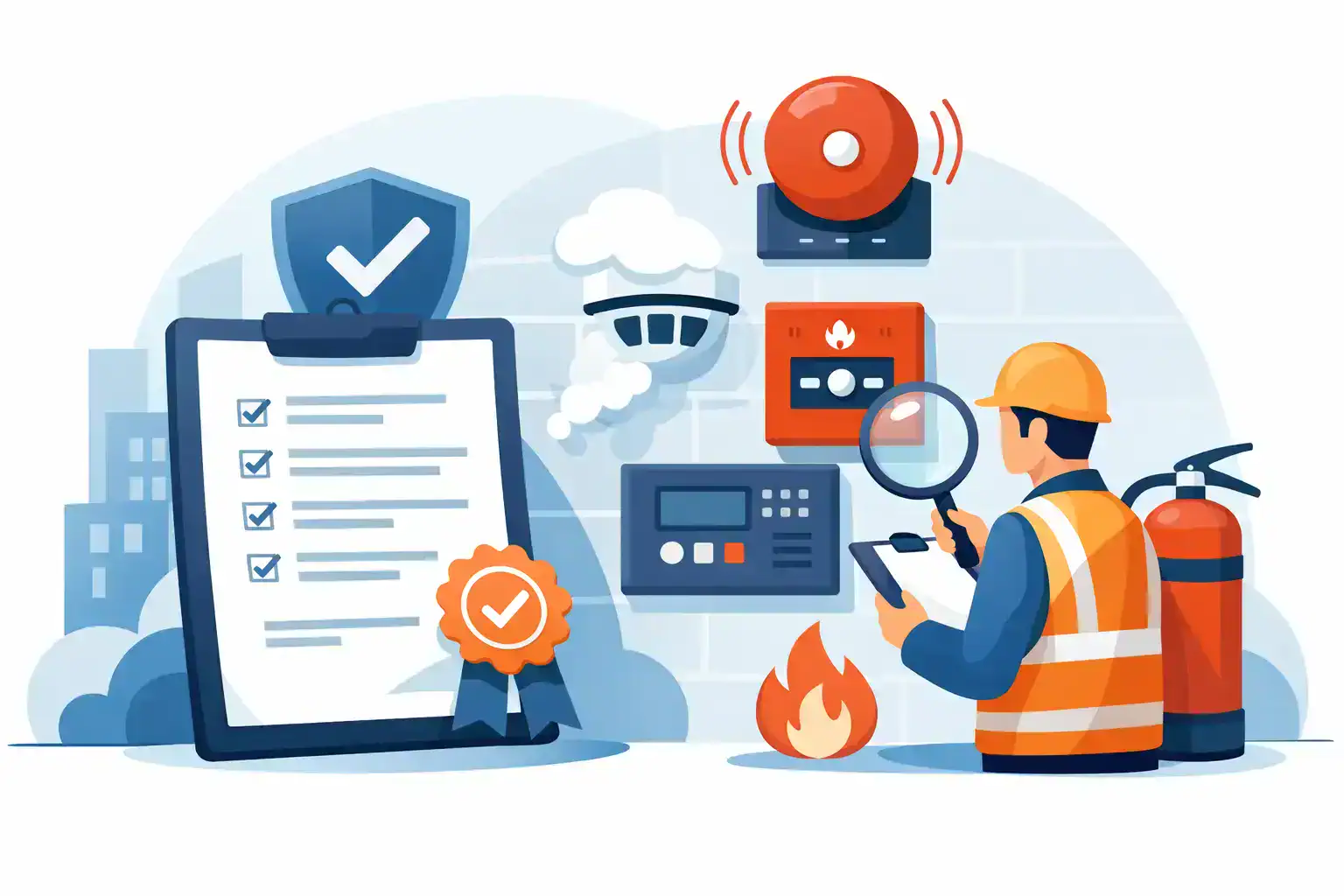
Emergency Communication System

كل تصميماتنا مطابقة للكود السعودى والدولى

معتمدين من بلدى

معتمدين من امانة الرياض

معتمدين من هيئة مدن

معتمدين من الدفاع المدنى

Learn about the importance of contracting with an accredited engineering consultancy, the conditions and requirements involved, and how to choose the best engineering offices to manage and design your projects effectively and efficiently.
Contact us now or reach us on WhatsApp at the following number:
0557984942

© 2012 All Rights Reserved

Emergency Communication System


Emergency Communication System: A Short Overview An Emergency Communication System (ECS) is a coordinated set of tools, processes, and people designed to quickly share critical information during emergencies. The goal is to alert the right audiences, gather feedback, and support coordinated responses across organizations, communities, and authorities. Why an ECS matters - Timely alerts save lives and reduce injuries by guiding people to safety or telling them what to do. - Clear, accurate information helps responders allocate resources efficiently. - Redundancy matters: if one channel fails, others ensure the message still gets through. - Civilians, businesses, schools, and government agencies benefit from a shared, predictable communications framework. Core components - Alerts and notification channels: Text messages, voice calls, emails, mobile push alerts, social media posts, digital signage, loudspeakers, sirens, and PA systems. - Two-way communication: Hotline numbers, web forms, chat apps, and emergency apps that allow the public to ask questions or report conditions. - Incident management integration: A system that links to incident command, situation reports, and a public information function to coordinate messaging. - Redundancy and resilience: Backup power, satellite or radio options, and multiple providers to survive outages. - Targeting and accessibility: Geographically targeted alerts, language options, and accessibility features for people with disabilities. - Verification and accuracy: Clear, concise messaging with approved templates to avoid confusion and misinformation. How it works (a typical flow) 1) A threat or incident is detected or declared. 2) Authorities assess risk and decide on messaging. 3) The ECS distributes alerts through multiple channels to the relevant audiences. 4) Recipients respond, if needed, or follow guidance and instructions. 5) Feedback and updated conditions are monitored, and messages are adjusted accordingly. 6) After-action reviews improve future communications. Common types of ECS - Public alert systems: Broad alerts to residents and visitors (e.g., weather warnings, evacuation orders). - Organization-specific systems: Internal alerts within schools, campuses, hospitals, or companies. - Enterprise continuity systems: Notifications about system outages, safety drills, or security incidents. - Social and media coordination: Official posts and press briefings to reinforce and clarify messages. Key features to look for - Multiple channels with automatic cross-channel delivery. - Geotargeting to reach only the affected areas. - Language support and accessibility options. - Two-way communication capabilities for status checks and questions. - Easy-to-use authoring tools with approved templates. - Strong redundancy, offline capabilities, and secure access. - Auditing, reporting, and integration with other emergency and IT systems. Benefits and outcomes - Faster, clearer dissemination of life-saving instructions. - Reduced rumor and confusion through authoritative messaging. - Improved coordination among agencies and responders. - Better public trust through consistent, transparent communication. Common challenges and how to address them - Reliability under stress: Invest in redundant networks, offline alerts, and rigorous testing. - Information overload: Use concise, action-oriented language and evidence-based templates. - Privacy and data security: Implement access controls, encryption, and compliance with applicable laws. - Maintaining up-to-date contact lists: Regularly refresh data and conduct drills. - Interoperability: Adopt common standards and participate in joint exercises with partners. Implementation tips (a starting checklist) - Define objectives: What should the ECS achieve in your jurisdiction or organization? - Map audiences: Identify who needs to be alerted and through which channels. - Choose channels with redundancy: Don’t rely on a single method. - Create message templates: Pre-approved, clear, and actionable content. - Test and exercise: Schedule drills to validate delivery, comprehension, and workflows. - Train staff and set roles: Establish who authorizes messages and who responds. - Monitor performance: Use metrics like delivery rates, response rates, and time-to-notification. - Review and improve: After drills or real incidents, update procedures and content. Real-world examples (brief) - Public safety: Many countries use a national or regional public alert system that can trigger messages via SMS, TV, radio, and sirens. - Wireless Emergency Alerts (WEA): A U.S. system that sends short alerts to mobile devices in affected areas. - NOAA Weather Radio: Continuous broadcasts of weather alerts to communities, improving preparedness for natural hazards. If you’d like, I can tailor this article to a specific audience (schools, hospitals, cities) or expand any section with examples, templates, or a short implementation plan.


Emergency Communication System

We are a consulting and contracting company in the same group, For pricing or design download our app, For any purchasing please contact us ASAP 


All designs are according to NFPA

© 2020 All Rights Reserved

Engineering & Safety Consulting Company Saudi Arabia
Saif – Engineering & Safety Consulting

Integrated Engineering & Safety Consulting Services

We are a specialized engineering consulting firm delivering comprehensive architectural, structural, mechanical, electrical, fire protection, industrial, oil & gas, and environmental engineering services. All designs, studies, and reports are prepared in full compliance with SBC, NFPA, FIDIC, API, ISO, and Saudi Civil Defense & MODON requirements.

🔧 1. General Engineering Consulting

  • FIDIC Contract Administration & Claims Management
  • Engineering Feasibility Studies & Technical Due Diligence
  • Project Management & Technical Supervision
  • Engineering Risk Analysis for Mega & Industrial Projects

🏗️ 2. Civil & Structural Engineering Consulting

  • Structural design of reinforced concrete & steel buildings
  • High-rise towers, bridges, tunnels, and road structures
  • Geotechnical & soil investigation studies
  • Seismic, wind & load analysis (ETABS / SAFE)
  • Structural assessment & retrofit of existing buildings

📐 3. Architectural Design & Urban Planning

  • Residential, commercial & mixed-use architectural design
  • Façade engineering & sustainable green architecture
  • Urban planning & master planning services
  • BIM modeling & coordination (Revit Architecture)

⚙️ 4. Mechanical Engineering Consulting

  • HVAC systems design & energy optimization
  • Water supply, drainage & plumbing systems
  • Pumping stations, compressors & industrial cooling
  • Fuel systems: Diesel, LPG & Natural Gas
  • Industrial mechanical & process systems

⚡ 5. Electrical Engineering Consulting

  • Low & Medium Voltage (LV/MV) power systems
  • Load calculations, voltage drop & short-circuit studies
  • Solar PV & renewable energy systems
  • Low current & ELV systems design
  • BMS, SCADA, CCTV & Access Control Systems

🔥 6. Fire Protection & Life Safety Engineering

This is our core specialty. All fire protection designs, reports, and approvals are delivered in strict compliance with SBC, NFPA, Saudi Civil Defense, and MODON regulations.

🔴 Firefighting Systems Design

  • Wet, Dry, Pre-Action & Deluge Sprinkler Systems
  • Foam systems, foam monitors & foam standpipes
  • Water Mist systems (NFPA / UL / FM)
  • Fire pump room & hydraulic calculations
  • ESFR, CMSA, CMDA & In-Rack Sprinklers

🔔 Fire Alarm & Detection Systems

  • Addressable, Conventional & Voice Evacuation
  • VESDA, Linear Heat & Video Smoke Detection
  • Smart & IoT-enabled fire detection systems

📄 Fire Safety Studies & Reports

  • Fire Strategy Reports
  • Fire Risk Assessments
  • CFD Smoke & Evacuation Analysis
  • SBC, NFPA & MODON compliance reports
  • Emergency & Evacuation Plans

🏭 7. Industrial Engineering Consulting

  • Factory layout & material flow optimization
  • Production line improvement & lean manufacturing
  • OEE, time & motion studies
  • Industrial piping & process engineering

🛢️ 8. Oil & Gas Engineering Consulting

  • API 650 & API 620 storage tank design
  • LPG, LNG & Natural Gas piping systems
  • Explosion risk & ATEX hazard studies

🌿 9. Environmental Engineering Consulting

  • Environmental Impact Assessments (EIA)
  • Air quality & emission monitoring
  • Waste & hazardous waste management
  • STP, WWTP & grey water systems

📞 Contact Us for Engineering Proposals

WhatsApp / Call: 0557984942

WhatsApp / Call: 0545587404

Email: project.manager@telal-elwatan.com
لقسم الاستشارات الهندسية والتقارير والشهادات ومتطلبات الدفاع المدنى والبلدية و هيئة مدن  يرجى الاتصال على 0557984942

للتوريدات والطلبات الاخرى يرجى ارسال طلبك واتس اب لخدمتكم

بشكل اسرع على احد الارقام التالية 0531433890 

X