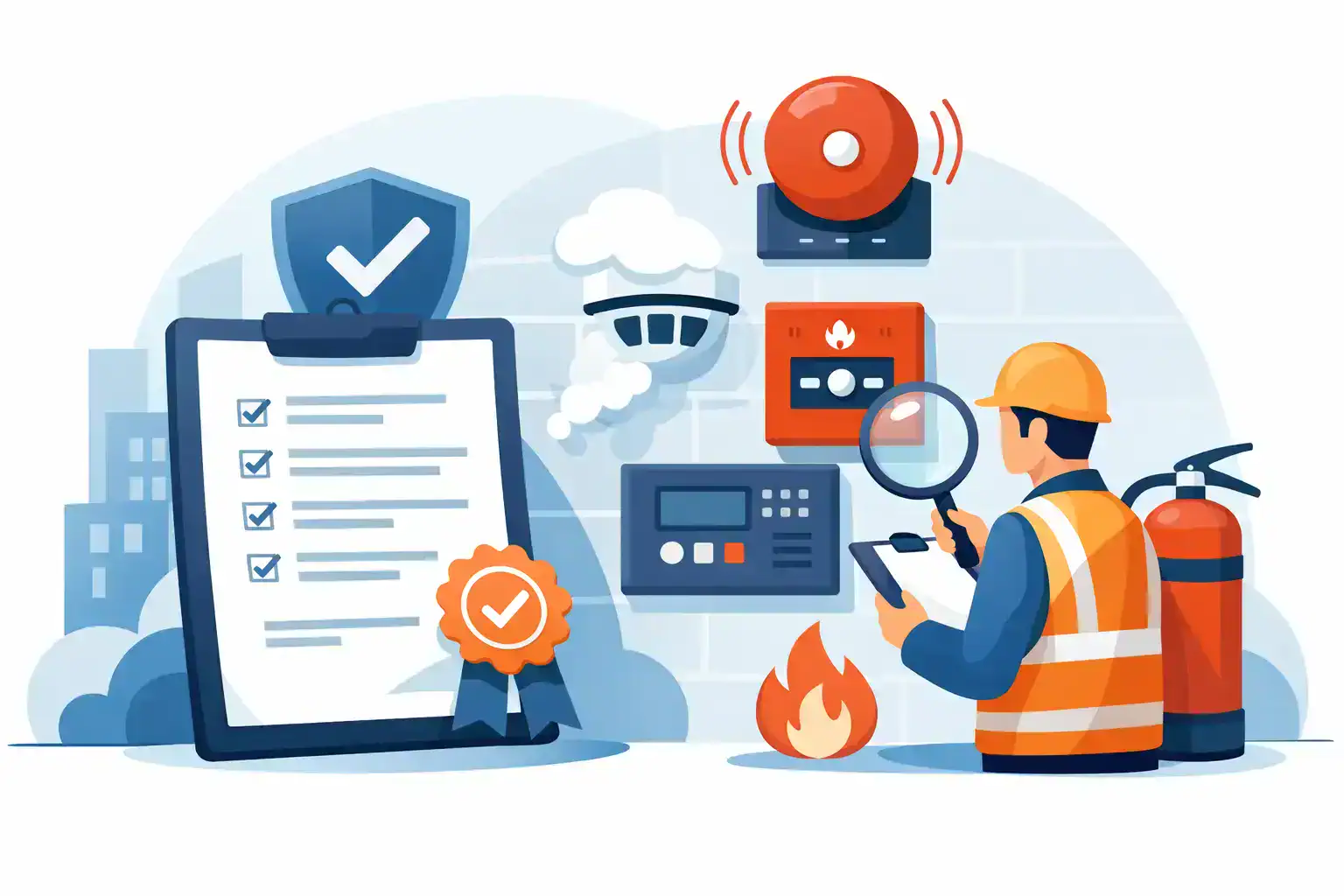
Foam System Electrically Controlled Valves

كل تصميماتنا مطابقة للكود السعودى والدولى

معتمدين من بلدى

معتمدين من امانة الرياض

معتمدين من هيئة مدن

معتمدين من الدفاع المدنى

Learn about the importance of contracting with an accredited engineering consultancy, the conditions and requirements involved, and how to choose the best engineering offices to manage and design your projects effectively and efficiently.
Contact us now or reach us on WhatsApp at the following number:
0557984942

© 2012 All Rights Reserved

Foam System Electrically Controlled Valves


Foam System Electrically Controlled Valves In many fire protection and process safety installations, foam systems are used to blanket a fire with foam solution that cools and displaces oxygen. A key part of making these systems reliable and responsive are electrically controlled valves (ECVs). These valves use electrical power to open or close flow paths, coordinating foam concentrate, water, and foam solution delivery when a system is activated. What they are and what they do - Electrically controlled valves are actuated by electric signals, typically from a fire alarm panel, a PLC, or a dedicated control module. They can be 24 VDC, 120/240 VAC, or other common voltages depending on the system design. - In foam systems, ECVs manage the movement of foam concentrate, water, and sometimes air or inert gas to ensure the correct foam proportioning and reliable discharge. - They provide remote control and supervision. When a fire condition is sensed or a manual pull station is activated, the control system can open or close the appropriate valves to start or shut down foam production and distribution. Common valve types used in foam systems - Solenoid valves: Small, fast-acting valves that are ideal for pilot control or for direct actuation on smaller flow paths. They are simple, cost-effective, and widely available in various materials to resist foam concentrates. - Electric motorized globe or ball valves: More robust and capable of handling higher flow rates and pressures. They offer precise throttling as well as on/off control, and are suitable for main foam concentrate lines or larger ducting. - 2-way and 3-way electric control valves: Used to route flows, isolate circuits, or blend foam concentrate with water. 3-way configurations can help in sequencing and fail-safe configurations. - Integrated electric control valves: Some foam systems use valves that arrive as part of an integrated package with a control module, position feedback, and status supervision. Key considerations when selecting ECVs - Compatibility with foam concentrate: The valve materials (seals, seats, elastomers) must resist the chosen foam concentrate to avoid degradation and leakage. Elastomer compatibility and corrosion resistance are critical. - Pressure and flow rating: The valve must handle the system’s service pressure and the expected foam flow rates without excessive torque or leakage. - Actuation voltage and control logic: Ensure the valve’s power requirements match the available supply and that the control logic (fail-safe behavior, open/closed positions on power loss) aligns with the overall safety design. - Fail-safe behavior: In most fire protection applications, valves are designed to fail safely (usually closed) on loss of power, to prevent unintended discharge. Some circuits may be configured to fail open if required by the system architecture. - Feedback and supervision: Status monitoring (position indication) and interlocks help the central control panel confirm that valves are in the desired state, enabling periodic testing and maintenance. - Environment and mounting: Enclosures should protect against dust, moisture, chemical exposure, and temperature extremes typical of the installation site. Proper mounting and wiring routing are essential to reliability. Installation and maintenance best practices - Follow relevant standards and manufacturer recommendations (for example, NFPA 11 for foam systems and NFPA 25 for testing and maintenance). Compliance ensures compatibility with other components and proper inspection cycles. - Use properly rated cables, connectors, and power supplies with adequate short-circuit protection and proper grounding. - Plan for supervision: valves should be continuously supervised with indication of open/closed status and any actuation faults. - Regular testing: perform functional tests as part of scheduled inspections. This includes verifying that valves respond to control signals, seating is reliable, and there are no leaks. - Preventive maintenance: inspect actuators for wear, check seals and packing, clean enclosures, and verify that any cooling or heating devices in the actuator remain within specification. - Documentation: keep up-to-date wiring diagrams, valve positions, and test records. Clear documentation helps during maintenance, upgrades, or emergency response. Benefits of using electrically controlled valves in foam systems - Remote operation and integration: ECVs enable automated sequencing, remote shutoff, and integration with fire alarms, PLCs, or centralized control rooms. - Improved reliability and repeatability: Electronic control provides precise, repeatable valve actuation and easier diagnostics than purely manual systems. - Faster response in emergencies: With proper wiring and supervision, activation signals reach valves quickly, delivering foam solution promptly when needed. - Flexibility for complex foam schemes: ECVs support 2-way/3-way configurations and proportioning arrangements that may be required for different hazards or areas within a facility. In short, electrically controlled valves are a foundational element of modern foam fire suppression systems. They enable reliable, fast, and supervised control of foam concentrate and water flow, helping to ensure effective foam discharge and safer outcomes in fire events. If you’re selecting or maintaining such a system, work with a qualified fire protection engineer to choose the right valve types, materials, and control strategy for your specific foam concentrate, flow requirements, and safety goals.


Foam System Electrically Controlled Valves

We are a consulting and contracting company in the same group, For pricing or design download our app, For any purchasing please contact us ASAP 


All designs are according to NFPA

© 2020 All Rights Reserved

Engineering & Safety Consulting Company Saudi Arabia
Saif – Engineering & Safety Consulting

Integrated Engineering & Safety Consulting Services

We are a specialized engineering consulting firm delivering comprehensive architectural, structural, mechanical, electrical, fire protection, industrial, oil & gas, and environmental engineering services. All designs, studies, and reports are prepared in full compliance with SBC, NFPA, FIDIC, API, ISO, and Saudi Civil Defense & MODON requirements.

🔧 1. General Engineering Consulting

  • FIDIC Contract Administration & Claims Management
  • Engineering Feasibility Studies & Technical Due Diligence
  • Project Management & Technical Supervision
  • Engineering Risk Analysis for Mega & Industrial Projects

🏗️ 2. Civil & Structural Engineering Consulting

  • Structural design of reinforced concrete & steel buildings
  • High-rise towers, bridges, tunnels, and road structures
  • Geotechnical & soil investigation studies
  • Seismic, wind & load analysis (ETABS / SAFE)
  • Structural assessment & retrofit of existing buildings

📐 3. Architectural Design & Urban Planning

  • Residential, commercial & mixed-use architectural design
  • Façade engineering & sustainable green architecture
  • Urban planning & master planning services
  • BIM modeling & coordination (Revit Architecture)

⚙️ 4. Mechanical Engineering Consulting

  • HVAC systems design & energy optimization
  • Water supply, drainage & plumbing systems
  • Pumping stations, compressors & industrial cooling
  • Fuel systems: Diesel, LPG & Natural Gas
  • Industrial mechanical & process systems

⚡ 5. Electrical Engineering Consulting

  • Low & Medium Voltage (LV/MV) power systems
  • Load calculations, voltage drop & short-circuit studies
  • Solar PV & renewable energy systems
  • Low current & ELV systems design
  • BMS, SCADA, CCTV & Access Control Systems

🔥 6. Fire Protection & Life Safety Engineering

This is our core specialty. All fire protection designs, reports, and approvals are delivered in strict compliance with SBC, NFPA, Saudi Civil Defense, and MODON regulations.

🔴 Firefighting Systems Design

  • Wet, Dry, Pre-Action & Deluge Sprinkler Systems
  • Foam systems, foam monitors & foam standpipes
  • Water Mist systems (NFPA / UL / FM)
  • Fire pump room & hydraulic calculations
  • ESFR, CMSA, CMDA & In-Rack Sprinklers

🔔 Fire Alarm & Detection Systems

  • Addressable, Conventional & Voice Evacuation
  • VESDA, Linear Heat & Video Smoke Detection
  • Smart & IoT-enabled fire detection systems

📄 Fire Safety Studies & Reports

  • Fire Strategy Reports
  • Fire Risk Assessments
  • CFD Smoke & Evacuation Analysis
  • SBC, NFPA & MODON compliance reports
  • Emergency & Evacuation Plans

🏭 7. Industrial Engineering Consulting

  • Factory layout & material flow optimization
  • Production line improvement & lean manufacturing
  • OEE, time & motion studies
  • Industrial piping & process engineering

🛢️ 8. Oil & Gas Engineering Consulting

  • API 650 & API 620 storage tank design
  • LPG, LNG & Natural Gas piping systems
  • Explosion risk & ATEX hazard studies

🌿 9. Environmental Engineering Consulting

  • Environmental Impact Assessments (EIA)
  • Air quality & emission monitoring
  • Waste & hazardous waste management
  • STP, WWTP & grey water systems

📞 Contact Us for Engineering Proposals

WhatsApp / Call: 0557984942

WhatsApp / Call: 0545587404

Email: project.manager@telal-elwatan.com
لقسم الاستشارات الهندسية والتقارير والشهادات ومتطلبات الدفاع المدنى والبلدية و هيئة مدن  يرجى الاتصال على 0557984942

للتوريدات والطلبات الاخرى يرجى ارسال طلبك واتس اب لخدمتكم

بشكل اسرع على احد الارقام التالية 0531433890 

X