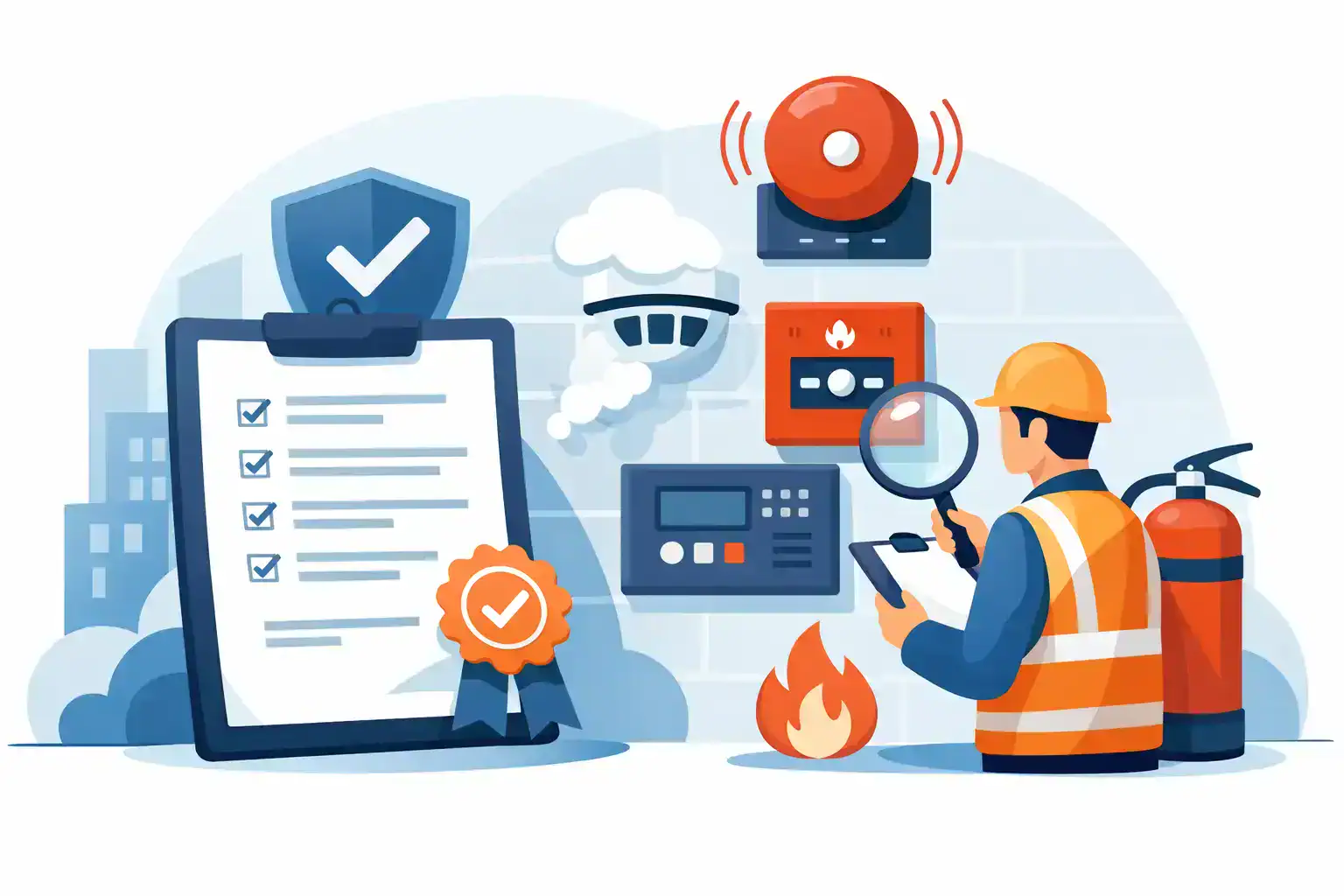
HVAC Control System

كل تصميماتنا مطابقة للكود السعودى والدولى

معتمدين من بلدى

معتمدين من امانة الرياض

معتمدين من هيئة مدن

معتمدين من الدفاع المدنى

Learn about the importance of contracting with an accredited engineering consultancy, the conditions and requirements involved, and how to choose the best engineering offices to manage and design your projects effectively and efficiently.
Contact us now or reach us on WhatsApp at the following number:
0557984942

© 2012 All Rights Reserved

HVAC Control System


Small article: HVAC Control System An HVAC control system is the brain of heating, ventilating, and air-conditioning equipment. In a home or small building, it keeps indoor temperatures comfortable, air clean, and energy use reasonable by coordinating sensors, actuators, and the heater or cooling equipment through a controller. Modern systems can be simple or sophisticated, but they all share the same goal: maintain the desired conditions with efficient, reliable operation. What makes up a small HVAC control system - Sensors: Temperature sensors measure air temperature where it matters (often near living spaces), while humidity and carbon dioxide sensors monitor moisture and air quality. Occupancy sensors can help the system know when people are present. - Actuators: These are devices that actually adjust equipment. Examples include dampers that control how much outdoor air enters, valves for heating water in a radiator or hydronic system, and variable-speed drives for fans and pumps. - Controller: The “brain” of the system. A simple thermostat is a basic controller. More advanced setups use a programmable or smart thermostat, a microcontroller, or a small building-management system (BAS) to run more complex control logic. - User interface: A wall thermostat, a mobile app, or a web dashboard lets occupants set comfort targets, schedules, and sometimes energy-usage reports. - HVAC equipment: The heating and cooling equipment itself (furnace, air conditioner, heat pump, air handler) is the actuation target of the control system. How the control loop works - Setpoint and sensing: The occupant sets a desired temperature (and sometimes humidity). The sensor reports the current conditions. - Comparison and decision: The controller compares the actual conditions to the setpoints and calculates the error. - Action: Based on the error and the chosen control strategy, the controller sends commands to actuators to adjust airflow, mix outdoor air, modulate heat output, or change compressor operation. - Feedback: The system monitors the resulting conditions, and the loop repeats, keeping the space within the target range. Common control strategies for small systems - On/off control: The simplest approach. Equipment turns fully on or off to reach a target. It’s inexpensive but can lead to larger temperature swings. - PID control: Proportional-Integral-Derivative control smooths responses to avoid overshoot and undershoot, improving comfort and reducing wear on equipment. - Zoning and VAV (variable air volume): In larger homes or small commercial spaces, different zones have their own sensors and dampers or dampers in air handling units. This allows tailored comfort and energy savings by reducing conditioning to unoccupied areas. - Demand-controlled ventilation (DCV): Uses CO2 or occupancy data to adjust the amount of outdoor air brought in. This saves energy when spaces are lightly occupied while maintaining air quality when needed. - Occupancy-based scheduling: The system uses presence data or calendars to adjust heating, cooling, and ventilation, aligning operation with actual use. - Economizer and weather-responsive control: Some systems use outdoor conditions to reduce cooling energy by bringing in cooler outside air when appropriate. Benefits of a well-designed small HVAC control system - Comfort: Smoother temperature control and better humidity management. - Energy efficiency: Optimized startup, reduced overshoot, and strategic ventilation save energy. - IAQ improvements: Timely ventilation and filtration help maintain air quality. - Maintenance and life of equipment: Smoother cycling, proper damper and valve operation, and predictive insights can reduce wear. Common challenges to watch for - Sensor accuracy and placement: Poor readings lead to ill-timed or incorrect adjustments. - System integration: Older components may not communicate well with newer controls without adapters or retrofits. - Calibration and tuning: PID and other strategies require proper tuning to avoid oscillations or slow responses. - Maintenance: Filters, dampers, and sensors require regular inspection for reliable performance. - Cybersecurity (for smart systems): Ensure updates, strong passwords, and secure connections to protect against intrusion. Tips for getting started with a small system - Start with a smart thermostat or a programmable thermostat to gain better control with minimal complexity. - Consider basic zoning if comfort is uneven across living spaces. - Use DCV or occupancy-based controls if you have variable occupancy and want to save energy without sacrificing IAQ. - Schedule regular maintenance checks for sensors and actuators, and verify setpoints seasonally (e.g., turn heating setpoints lower in winter, cooling setpoints higher in shoulder seasons to save energy). - Review energy usage and comfort reports to identify opportunities for adjustments. In summary, a small HVAC control system is about turning sensing into smart actions. Even modest upgrades—from better thermostats to simple zoning—can deliver noticeable improvements in comfort, energy use, and air quality. If you’d like, tell me your setting (residential or small commercial), the equipment you have, and the level of control you want, and I can tailor a brief plan or outline of options.


HVAC Control System

We are a consulting and contracting company in the same group, For pricing or design download our app, For any purchasing please contact us ASAP 


All designs are according to NFPA

© 2020 All Rights Reserved

Engineering & Safety Consulting Company Saudi Arabia
Saif – Engineering & Safety Consulting

Integrated Engineering & Safety Consulting Services

We are a specialized engineering consulting firm delivering comprehensive architectural, structural, mechanical, electrical, fire protection, industrial, oil & gas, and environmental engineering services. All designs, studies, and reports are prepared in full compliance with SBC, NFPA, FIDIC, API, ISO, and Saudi Civil Defense & MODON requirements.

🔧 1. General Engineering Consulting

  • FIDIC Contract Administration & Claims Management
  • Engineering Feasibility Studies & Technical Due Diligence
  • Project Management & Technical Supervision
  • Engineering Risk Analysis for Mega & Industrial Projects

🏗️ 2. Civil & Structural Engineering Consulting

  • Structural design of reinforced concrete & steel buildings
  • High-rise towers, bridges, tunnels, and road structures
  • Geotechnical & soil investigation studies
  • Seismic, wind & load analysis (ETABS / SAFE)
  • Structural assessment & retrofit of existing buildings

📐 3. Architectural Design & Urban Planning

  • Residential, commercial & mixed-use architectural design
  • Façade engineering & sustainable green architecture
  • Urban planning & master planning services
  • BIM modeling & coordination (Revit Architecture)

⚙️ 4. Mechanical Engineering Consulting

  • HVAC systems design & energy optimization
  • Water supply, drainage & plumbing systems
  • Pumping stations, compressors & industrial cooling
  • Fuel systems: Diesel, LPG & Natural Gas
  • Industrial mechanical & process systems

⚡ 5. Electrical Engineering Consulting

  • Low & Medium Voltage (LV/MV) power systems
  • Load calculations, voltage drop & short-circuit studies
  • Solar PV & renewable energy systems
  • Low current & ELV systems design
  • BMS, SCADA, CCTV & Access Control Systems

🔥 6. Fire Protection & Life Safety Engineering

This is our core specialty. All fire protection designs, reports, and approvals are delivered in strict compliance with SBC, NFPA, Saudi Civil Defense, and MODON regulations.

🔴 Firefighting Systems Design

  • Wet, Dry, Pre-Action & Deluge Sprinkler Systems
  • Foam systems, foam monitors & foam standpipes
  • Water Mist systems (NFPA / UL / FM)
  • Fire pump room & hydraulic calculations
  • ESFR, CMSA, CMDA & In-Rack Sprinklers

🔔 Fire Alarm & Detection Systems

  • Addressable, Conventional & Voice Evacuation
  • VESDA, Linear Heat & Video Smoke Detection
  • Smart & IoT-enabled fire detection systems

📄 Fire Safety Studies & Reports

  • Fire Strategy Reports
  • Fire Risk Assessments
  • CFD Smoke & Evacuation Analysis
  • SBC, NFPA & MODON compliance reports
  • Emergency & Evacuation Plans

🏭 7. Industrial Engineering Consulting

  • Factory layout & material flow optimization
  • Production line improvement & lean manufacturing
  • OEE, time & motion studies
  • Industrial piping & process engineering

🛢️ 8. Oil & Gas Engineering Consulting

  • API 650 & API 620 storage tank design
  • LPG, LNG & Natural Gas piping systems
  • Explosion risk & ATEX hazard studies

🌿 9. Environmental Engineering Consulting

  • Environmental Impact Assessments (EIA)
  • Air quality & emission monitoring
  • Waste & hazardous waste management
  • STP, WWTP & grey water systems

📞 Contact Us for Engineering Proposals

WhatsApp / Call: 0557984942

WhatsApp / Call: 0545587404

Email: project.manager@telal-elwatan.com

لقسم الاستشارات الهندسية والتقارير والشهادات ومتطلبات الدفاع المدنى والبلدية و هيئة مدن  يرجى الاتصال على 0557984942

للتوريدات والطلبات الاخرى يرجى ارسال طلبك واتس اب لخدمتكم

بشكل اسرع على احد الارقام التالية 0531433890 

X