Marine & Offshore Electrical Systems

كل تصميماتنا مطابقة للكود السعودى والدولى

معتمدين من بلدى

معتمدين من امانة الرياض

معتمدين من هيئة مدن

معتمدين من الدفاع المدنى

Learn about the importance of contracting with an accredited engineering consultancy, the conditions and requirements involved, and how to choose the best engineering offices to manage and design your projects effectively and efficiently.
Contact us now or reach us on WhatsApp at the following number:
0557984942

© 2012 All Rights Reserved

Marine & Offshore Electrical Systems


Marine and offshore electrical systems are the lifeblood of ships, offshore platforms, and mobile rigs. They must deliver reliable power in harsh, corrosive, and dynamic environments while meeting strict safety and regulatory requirements. A well-designed system provides generation, distribution, protection, control, and energy storage all working in harmony to keep propulsion, hotel loads, safety systems, and mission-critical equipment operating around the clock. Overview Marine and offshore electrical architectures are built to be robust, redundant, and scalable. Vessels and platforms often employ multiple power sources (diesel or gas-turbine generators, shaft generators, and shore connections) and a layered distribution network that can isolate faults, manage loads, and keep vital systems alive during maintenance or emergencies. On offshore installations, electrical systems may extend to subsea power distribution and complex dynamic positioning (DP) arrangements, where reliability and precise control are essential for safety and operation. Key components - Power generation: Main and auxiliary generators provide electric power for propulsion, hotel loads (cabin, offices, electronics), lighting, and process equipment. Offshore platforms may also use gas turbines or other prime movers. Redundant generation is common to meet classification and safety requirements. - Electrical propulsion and drives: Electric propulsion motors, variable frequency drives (VFDs), and shaft generators convert electrical power into thrust. Modern vessels may use pod drives or azimuth thrusters controlled by advanced marine automation systems. - Electrical distribution and protection: Main switchboards, distribution boards, busbars, switchgear, circuit breakers, and protection relays form the backbone of power delivery. Segregated electrical zones and proper earthing/grounding reduce the risk of cascading faults. - Energy storage and hybridization: Batteries (lead-acid or lithium-based), sometimes in combination with supercapacitors, enable peak shaving, quiet operation for certain roles, and support for electric propulsion. Hybrid configurations help reduce fuel consumption and emissions. - Shore power and power management: Shore-side electrical connections allow vessels and platforms to receive power while docked or during maintenance. Integrated Power Management Systems (PMS) optimize loads, coordinate generation, and improve energy efficiency. - Control and automation: PLCs, SCADA, and marine automation networks monitor electrical parameters, control propulsion and auxiliary equipment, and manage alarms and maintenance schedules. Redundancy in control pathways is common to ensure continued operation under fault conditions. - Subsea and offshore electrical systems: On installations like oil and gas platforms, subsea power distribution via umbilicals and subsea switchgear delivers power to subsea equipment. HVDC connections between platforms or to shore may be used for long-distance transmission. - Safety, protection, and compliance: Fire and gas detection, insulation monitoring, short-circuit protection, arc fault detection, and effective earthing are essential. Equipment must comply with class society rules (e.g., ABS, DNV GL, LR, BV), IMO SOLAS, and relevant IEC standards. Standards and regulatory context - Classification society rules: ABS, DNV GL, Lloyd’s Register, Bureau Veritas, and others set requirements for electrical installations, redundancy, testing, and maintenance. - IEC standards: The IEC 60092 family covers electrical installations in ships. Other relevant parts address general electrical equipment, insulation, protection, and performance criteria for maritime systems. - SOLAS and other safety regulations: The International Maritime Organization’s SOLAS Convention governs overall safety requirements that impact electrical design, fire protection, and lifesaving systems. - Offshore-specific standards: Offshore platforms follow industry guidelines and national or regional standards (DNV/GL, NORSOK, etc.) that address reliability, corrosion protection, and safety in harsh offshore environments. Design considerations and challenges - Harsh environment: Saltwater, humidity, vibration, and extreme temperatures demand robust enclosures, corrosion protection, cable insulation, and sealing. - Redundancy and reliability: N+1 or higher redundancy for power generation and essential systems minimizes the risk of blackout. - Protection and safety: Proper earth fault protection, short-circuit clearance, arc fault detection, and segregation of essential/non-essential circuits reduce risk to personnel and equipment. - EMC and interference: Electrical and electronic systems contend with electromagnetic compatibility issues from motors, generators, and RF equipment. - Cabling and installation: Flexible, rugged cables, reinforced cable routes, cable glands, and careful routing through bulkheads—plus cable fault tracing and maintenance programs. - Dynamic positioning and DP-class requirements: DP systems rely on continuous, stable power with strict failover and monitoring to maintain vessel position during operations. - Maintenance and service life: Marine and offshore assets have long service lives; preventive maintenance and timely replacement of aging components are critical. Emerging trends - Green and hybrid propulsion: More vessels and platforms adopt hybrid power systems, combining batteries with conventional generators to cut emissions and fuel use. - Shore power expansion: Increasing use of shore connections at ports reduces on-board emissions and fuel burn while in port. - DC power distribution: Some vessels adopt direct current (DC) grids for certain loads and VFD-driven propulsion, improving efficiency and control. - Digitalization and analytics: Remote monitoring, predictive maintenance, and condition-based servicing reduce downtime and optimize energy use. - Subsea electrification: In offshore oil, gas, and wind, subsea electrical solutions enable more efficient and safer operations with fewer on-deck loads. Practical guidance for readers - Prioritize redundancy for critical loads: propulsion, DP systems, life-support, fire and safety systems. - Implement robust protection schemes: coordinated relays, proper earthing, isolation monitoring, and regular testing. - Plan for maintenance: design for accessibility, maintain spares, and schedule regular dry-docking or inspection windows. - Align with standards early: involve class societies and engineers to ensure design, installation, and testing meet applicable rules. - Leverage energy-management tools: use PMS/EMS to optimize generation, storage, and shore power usage for efficiency and reliability. Conclusion Marine and offshore electrical systems blend complex engineering with strict safety and environmental demands. A well-designed system delivers reliable power for propulsion, habitat, safety, and operations, while incorporating redundancy, robust protection, and modern energy-management practices. As the industry moves toward decarbonization and greater automation, the role of electrical systems in ships and offshore installations will continue to grow in importance, requiring ongoing innovation and rigorous adherence to standards. If you’d like, I can tailor this article to a specific vessel type (container ships, offshore support vessels, rigs), a target length, or a particular audience (students, engineers, managers).


Marine & Offshore Electrical Systems

We are a consulting and contracting company in the same group, For pricing or design download our app, For any purchasing please contact us ASAP 


All designs are according to NFPA

© 2020 All Rights Reserved

Engineering & Safety Consulting Company Saudi Arabia
Saif – Engineering & Safety Consulting

Integrated Engineering & Safety Consulting Services

We are a specialized engineering consulting firm delivering comprehensive architectural, structural, mechanical, electrical, fire protection, industrial, oil & gas, and environmental engineering services. All designs, studies, and reports are prepared in full compliance with SBC, NFPA, FIDIC, API, ISO, and Saudi Civil Defense & MODON requirements.

🔧 1. General Engineering Consulting

  • FIDIC Contract Administration & Claims Management
  • Engineering Feasibility Studies & Technical Due Diligence
  • Project Management & Technical Supervision
  • Engineering Risk Analysis for Mega & Industrial Projects

🏗️ 2. Civil & Structural Engineering Consulting

  • Structural design of reinforced concrete & steel buildings
  • High-rise towers, bridges, tunnels, and road structures
  • Geotechnical & soil investigation studies
  • Seismic, wind & load analysis (ETABS / SAFE)
  • Structural assessment & retrofit of existing buildings

📐 3. Architectural Design & Urban Planning

  • Residential, commercial & mixed-use architectural design
  • Façade engineering & sustainable green architecture
  • Urban planning & master planning services
  • BIM modeling & coordination (Revit Architecture)

⚙️ 4. Mechanical Engineering Consulting

  • HVAC systems design & energy optimization
  • Water supply, drainage & plumbing systems
  • Pumping stations, compressors & industrial cooling
  • Fuel systems: Diesel, LPG & Natural Gas
  • Industrial mechanical & process systems

⚡ 5. Electrical Engineering Consulting

  • Low & Medium Voltage (LV/MV) power systems
  • Load calculations, voltage drop & short-circuit studies
  • Solar PV & renewable energy systems
  • Low current & ELV systems design
  • BMS, SCADA, CCTV & Access Control Systems

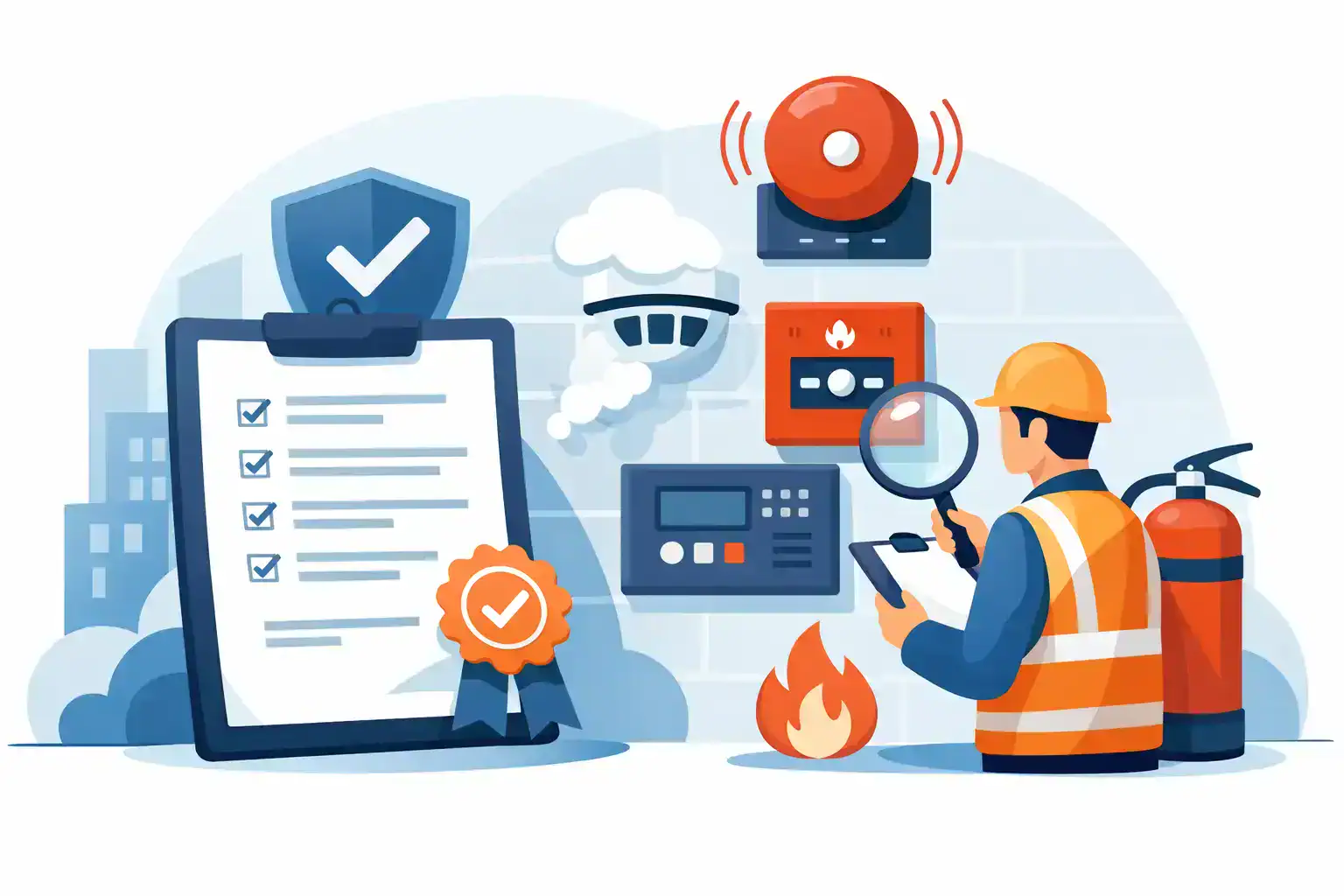
🔥 6. Fire Protection & Life Safety Engineering

This is our core specialty. All fire protection designs, reports, and approvals are delivered in strict compliance with SBC, NFPA, Saudi Civil Defense, and MODON regulations.

🔴 Firefighting Systems Design

  • Wet, Dry, Pre-Action & Deluge Sprinkler Systems
  • Foam systems, foam monitors & foam standpipes
  • Water Mist systems (NFPA / UL / FM)
  • Fire pump room & hydraulic calculations
  • ESFR, CMSA, CMDA & In-Rack Sprinklers

🔔 Fire Alarm & Detection Systems

  • Addressable, Conventional & Voice Evacuation
  • VESDA, Linear Heat & Video Smoke Detection
  • Smart & IoT-enabled fire detection systems

📄 Fire Safety Studies & Reports

  • Fire Strategy Reports
  • Fire Risk Assessments
  • CFD Smoke & Evacuation Analysis
  • SBC, NFPA & MODON compliance reports
  • Emergency & Evacuation Plans

🏭 7. Industrial Engineering Consulting

  • Factory layout & material flow optimization
  • Production line improvement & lean manufacturing
  • OEE, time & motion studies
  • Industrial piping & process engineering

🛢️ 8. Oil & Gas Engineering Consulting

  • API 650 & API 620 storage tank design
  • LPG, LNG & Natural Gas piping systems
  • Explosion risk & ATEX hazard studies

🌿 9. Environmental Engineering Consulting

  • Environmental Impact Assessments (EIA)
  • Air quality & emission monitoring
  • Waste & hazardous waste management
  • STP, WWTP & grey water systems

📞 Contact Us for Engineering Proposals

WhatsApp / Call: 0557984942

WhatsApp / Call: 0545587404

Email: project.manager@telal-elwatan.com
لقسم الاستشارات الهندسية والتقارير والشهادات ومتطلبات الدفاع المدنى والبلدية و هيئة مدن  يرجى الاتصال على 0557984942

للتوريدات والطلبات الاخرى يرجى ارسال طلبك واتس اب لخدمتكم

بشكل اسرع على احد الارقام التالية 0531433890 

X