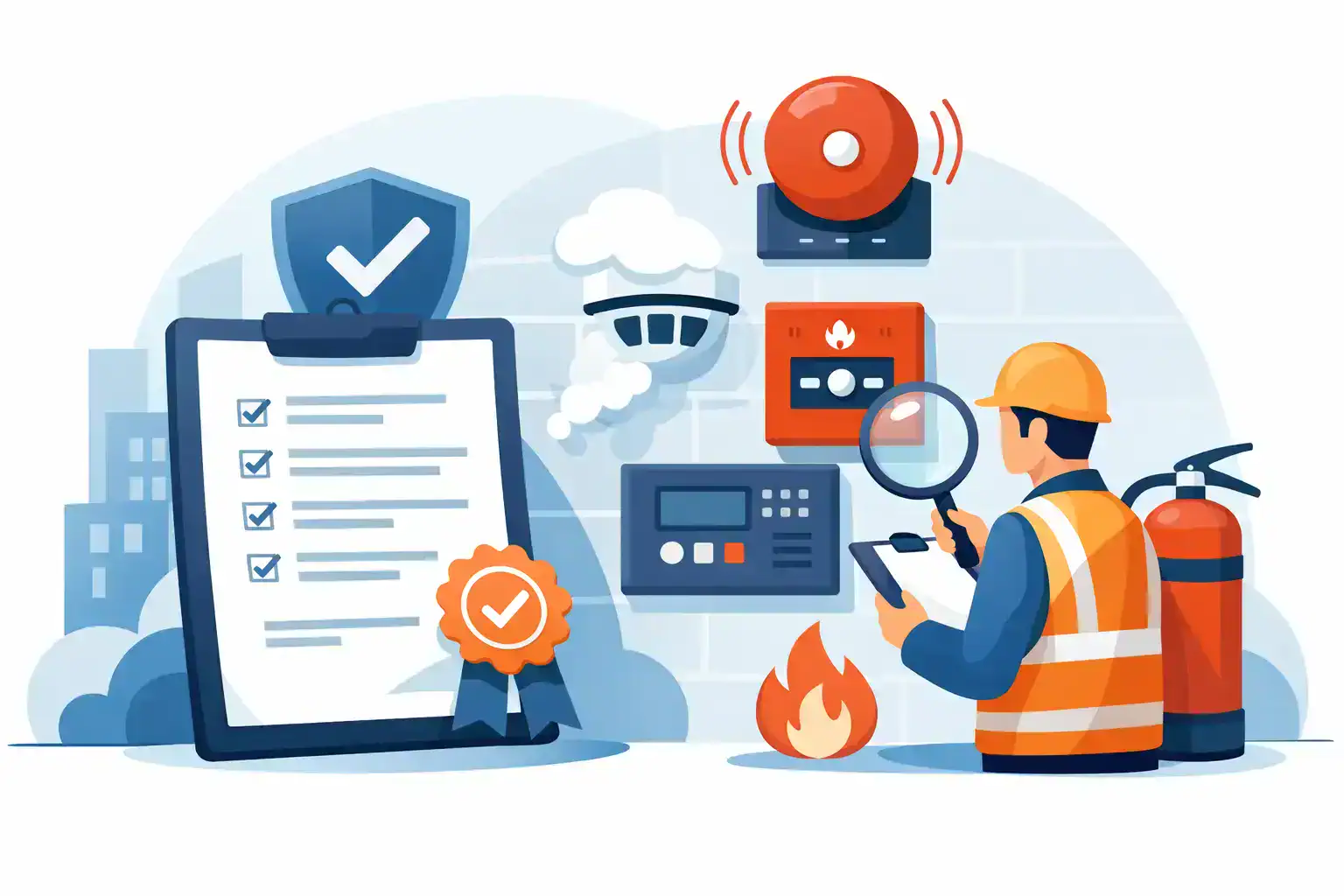
Smart Building IoT Sensors

كل تصميماتنا مطابقة للكود السعودى والدولى

معتمدين من بلدى

معتمدين من امانة الرياض

معتمدين من هيئة مدن

معتمدين من الدفاع المدنى

Learn about the importance of contracting with an accredited engineering consultancy, the conditions and requirements involved, and how to choose the best engineering offices to manage and design your projects effectively and efficiently.
Contact us now or reach us on WhatsApp at the following number:
0557984942

© 2012 All Rights Reserved

Smart Building IoT Sensors


Smart Building IoT Sensors: A Quick Overview What they are Smart building IoT sensors are small devices that measure environmental conditions, occupancy, and equipment status, then share that data over wireless networks. Collected data helps building management systems optimize energy use, improve comfort, ensure safety, and support maintenance. When many sensors work together, they create a live picture of how a building behaves and how people use it. Core sensor types you’ll typically find - Temperature and humidity: Monitor comfort levels and HVAC needs. - Occupancy and people-counting: Detect when spaces are in use to adjust lighting, HVAC, and access controls. - Light and daylight sensors: Measure ambient light to tune electric lighting and shading. - Air quality sensors: Track CO2, VOCs, and particulate matter to maintain healthy indoor air. - Water leak and moisture sensors: Alert to leaks or flood risks in basements, kitchens, and mechanical rooms. - Motion and door/window sensors: Support security and automatic responses (e.g., lock doors, trigger alarms). - Energy meters and sub-metering: Track electricity, water, and gas use by zone or device to find savings. - Vibration or equipment sensors: Monitor critical machinery (e.g., pumps, chillers) for maintenance needs. How it works in practice - Sensing: Each sensor captures a specific parameter (temperature, occupancy, air quality, etc.). - Communication: Sensors send data over wireless standards such as Wi‑Fi, Bluetooth Low Energy (BLE), Zigbee, or Z-Wave, often through a gateway or edge device. - Aggregation: Data is consolidated by a Building Management System (BMS), an IoT platform, or a cloud service. - Action: The system uses the data to automate controls (HVAC setpoints, lighting levels, venting), run analytics, or trigger alerts for facilities staff. Common architectures - Edge-first: Some processing happens on the local gateway or edge device for quick responses and privacy. - Cloud-enabled: Data is sent to the cloud for deeper analytics, long-term storage, and centralized monitoring. - Hybrid: A mix of edge processing for immediate actions and cloud analytics for optimization and reporting. Standards and interoperability - Protocols: BACnet/KNX (building automation), Zigbee, Z-Wave, BLE, Wi‑Fi. - Data models and interoperability: Open standards and common schemas help different sensors and BMSs work together. When possible, choose solutions that support open protocols and easy integration with your existing systems. Benefits of using smart building sensors - Energy efficiency: Real-time occupancy, temperature, and lighting data enable precise control of HVAC and lighting, reducing waste. - Occupant comfort: Maintains comfortable temperatures, good air quality, and appropriate lighting based on actual use. - Operational efficiency: Early detection of equipment faults, reduced maintenance costs, and better space utilization planning. - Safety and security: Immediate alerts for leaks, smoke, or unauthorized access improve risk management. - Data-driven decisions: Long-term trends identify opportunities for renovations, retrofits, or retrofitting with more efficient systems. Practical use cases - HVAC optimization: Adjust cooling/heating based on actual occupancy and temperature trends in each zone. - Smart lighting: Dimming or turning off lights in unoccupied areas and using daylight sensors to leverage natural light. - Air quality management: Ventilation adjustments when CO2 or VOC levels rise, maintaining healthy indoor air. - Water management: Early leak detection and automatic shutoffs in critical areas. - Energy accountability: Sub-metering reveals which floors or rooms drive energy use, guiding retrofits. - Space planning: Occupancy data informs how often spaces are used, guiding renovations or reassignments. Getting started: a few practical tips - Define clear goals: Is the aim energy savings, comfort, safety, or maintenance? Start with a focused pilot. - Map your zones: Break the building into zones or rooms to target controls and data collection efficiently. - Prioritize sensors: Begin with high-impact sensors (occupancy, temperature, air quality, and energy meters) in key areas. - Plan for integration: Ensure chosen sensors can connect to your existing BMS or IoT platform. Favor open standards for easier integration. - Consider power and installation: Some sensors are battery-powered; others require wiring. Evaluate maintenance needs and battery life. - Security and privacy: Use strong authentication, encryption, and regular updates. Limit data exposure and anonymize occupancy data where possible. - Data governance: Decide how long data is stored, who can access it, and how insights will be acted upon. Common challenges - Interoperability: Different vendors may use incompatible protocols. Prioritize open standards or middleware that bridges systems. - Data quality: Sensor placement, calibration, and maintenance affect accuracy. Establish a maintenance plan and regular recalibration. - Security: IoT devices can be attack vectors. Implement strong security baselines and monitor for anomalies. - Return on investment: Benefits accrue over time; start with a compelling pilot and scale as you demonstrate value. What’s on the horizon - AI-driven analytics and digital twins: Simulated models of building behavior to optimize operation and plan renovations. - More intelligent edge processing: Faster responses and greater privacy by processing data close to its source. - Retrofitting and retrofit kits: Easier upgrades for older buildings to adopt modern sensor networks. - Occupancy-aware controls: More precise, space-by-space regulation of HVAC, lighting, and shading as occupancy data becomes richer. In short, smart building IoT sensors turn static infrastructure into a responsive, data-driven system. By combining the right sensors, open standards, and thoughtful integration, buildings become more comfortable, efficient, and resilient. If you’d like, tell me about your building type and goals, and I can sketch a simple pilot plan tailored to your needs.


Smart Building IoT Sensors

We are a consulting and contracting company in the same group, For pricing or design download our app, For any purchasing please contact us ASAP 


All designs are according to NFPA

© 2020 All Rights Reserved

Engineering & Safety Consulting Company Saudi Arabia
Saif – Engineering & Safety Consulting

Integrated Engineering & Safety Consulting Services

We are a specialized engineering consulting firm delivering comprehensive architectural, structural, mechanical, electrical, fire protection, industrial, oil & gas, and environmental engineering services. All designs, studies, and reports are prepared in full compliance with SBC, NFPA, FIDIC, API, ISO, and Saudi Civil Defense & MODON requirements.

🔧 1. General Engineering Consulting

  • FIDIC Contract Administration & Claims Management
  • Engineering Feasibility Studies & Technical Due Diligence
  • Project Management & Technical Supervision
  • Engineering Risk Analysis for Mega & Industrial Projects

🏗️ 2. Civil & Structural Engineering Consulting

  • Structural design of reinforced concrete & steel buildings
  • High-rise towers, bridges, tunnels, and road structures
  • Geotechnical & soil investigation studies
  • Seismic, wind & load analysis (ETABS / SAFE)
  • Structural assessment & retrofit of existing buildings

📐 3. Architectural Design & Urban Planning

  • Residential, commercial & mixed-use architectural design
  • Façade engineering & sustainable green architecture
  • Urban planning & master planning services
  • BIM modeling & coordination (Revit Architecture)

⚙️ 4. Mechanical Engineering Consulting

  • HVAC systems design & energy optimization
  • Water supply, drainage & plumbing systems
  • Pumping stations, compressors & industrial cooling
  • Fuel systems: Diesel, LPG & Natural Gas
  • Industrial mechanical & process systems

⚡ 5. Electrical Engineering Consulting

  • Low & Medium Voltage (LV/MV) power systems
  • Load calculations, voltage drop & short-circuit studies
  • Solar PV & renewable energy systems
  • Low current & ELV systems design
  • BMS, SCADA, CCTV & Access Control Systems

🔥 6. Fire Protection & Life Safety Engineering

This is our core specialty. All fire protection designs, reports, and approvals are delivered in strict compliance with SBC, NFPA, Saudi Civil Defense, and MODON regulations.

🔴 Firefighting Systems Design

  • Wet, Dry, Pre-Action & Deluge Sprinkler Systems
  • Foam systems, foam monitors & foam standpipes
  • Water Mist systems (NFPA / UL / FM)
  • Fire pump room & hydraulic calculations
  • ESFR, CMSA, CMDA & In-Rack Sprinklers

🔔 Fire Alarm & Detection Systems

  • Addressable, Conventional & Voice Evacuation
  • VESDA, Linear Heat & Video Smoke Detection
  • Smart & IoT-enabled fire detection systems

📄 Fire Safety Studies & Reports

  • Fire Strategy Reports
  • Fire Risk Assessments
  • CFD Smoke & Evacuation Analysis
  • SBC, NFPA & MODON compliance reports
  • Emergency & Evacuation Plans

🏭 7. Industrial Engineering Consulting

  • Factory layout & material flow optimization
  • Production line improvement & lean manufacturing
  • OEE, time & motion studies
  • Industrial piping & process engineering

🛢️ 8. Oil & Gas Engineering Consulting

  • API 650 & API 620 storage tank design
  • LPG, LNG & Natural Gas piping systems
  • Explosion risk & ATEX hazard studies

🌿 9. Environmental Engineering Consulting

  • Environmental Impact Assessments (EIA)
  • Air quality & emission monitoring
  • Waste & hazardous waste management
  • STP, WWTP & grey water systems

📞 Contact Us for Engineering Proposals

WhatsApp / Call: 0557984942

WhatsApp / Call: 0545587404

Email: project.manager@telal-elwatan.com

لقسم الاستشارات الهندسية والتقارير والشهادات ومتطلبات الدفاع المدنى والبلدية و هيئة مدن  يرجى الاتصال على 0557984942

للتوريدات والطلبات الاخرى يرجى ارسال طلبك واتس اب لخدمتكم

بشكل اسرع على احد الارقام التالية 0531433890 

X